

Table of Contents
- Rugged Outdoor Gear for Adventure Travel: What Actually Survives the Trip
- Best Buy It for Life Outdoor Gear: What Separates Keepers From Replacements
- How to Maintain Rugged Outdoor Gear So It Lasts Multiple Seasons
- Essential Overlanding Equipment List for Truck-Based Adventures
- Weight-to-Durability Ratio: Where Ultralight Gear Fails and Where It Wins
- Matching Rugged Outdoor Gear to Your Adventure Type
- Frequently Asked Questions
Last Updated: October 3, 2026
Rugged Outdoor Gear for Adventure Travel: What Actually Survives the Trip
Most gear failures happen in the first 72 hours of a trip, not after years of use.
This guide from Tool Forge Supply focuses on what survives rather than what photographs well.
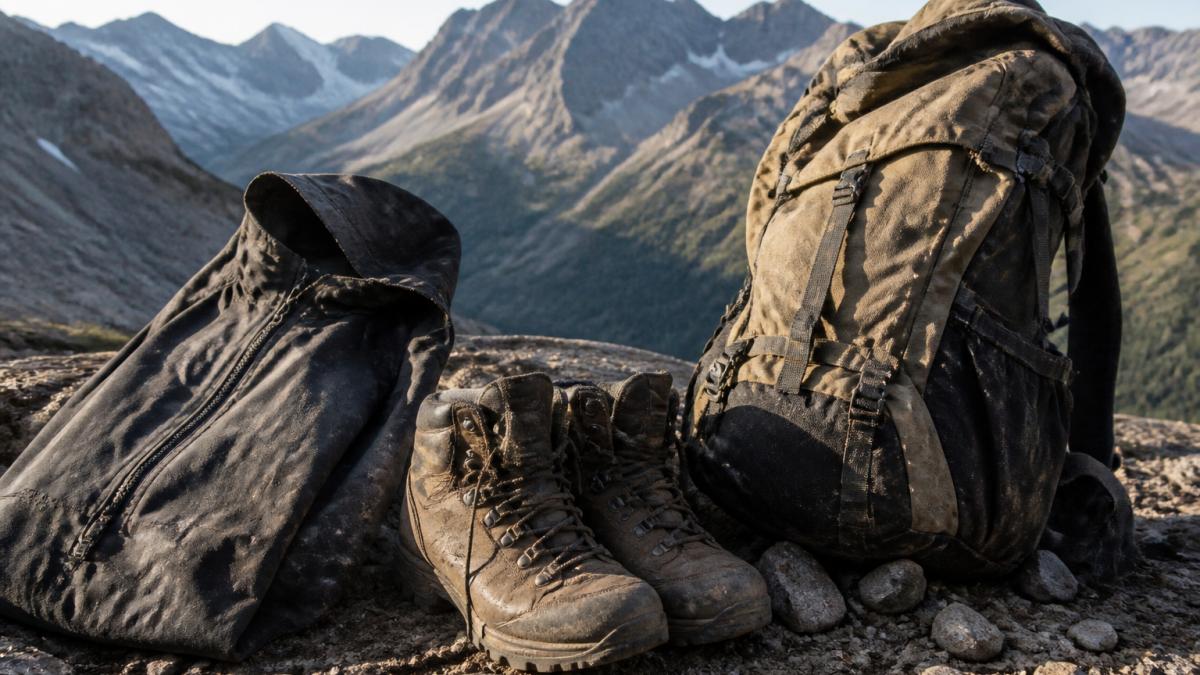
The three failure modes that end trips are abrasion, moisture ingress, and hardware fatigue. Everything else is marketing.
Best Buy It for Life Outdoor Gear: What Separates Keepers From Replacements
Buy-it-for-life outdoor gear is equipment whose materials and construction allow it to be repaired and returned to service rather than replaced. The distinction is not price. A $300 pack with a non-replaceable harness is disposable; a $180 pack with serviceable buckles is not.
Materials That Justify the Price
Ripstop fabric resists tearing because the grid of reinforcement threads stops a rip from propagating. 1050-denier nylon handles abrasion from rock, truck beds, and repeated ground contact. Dyneema composite fabric delivers high strength at very low weight, though it costs accordingly.
Look for seam-sealed construction on anything meant to shed water, and YKK zippers with heavy-duty hardware. Those two details separate gear that lasts a decade from gear that lasts a season.
Repairability and Warranty Reality
The thing nobody tells you about lifetime warranties is that most cover defects, not wear. Abrasion, UV degradation, and zipper failure from grit are typically excluded.
A common mistake is buying on warranty length alone. What matters more is whether the brand sells replacement parts. A pack with a modular design and replaceable buckles can be fixed in the field in minutes.
How to Maintain Rugged Outdoor Gear So It Lasts Multiple Seasons
Gear maintenance is the practice of cleaning, drying, and storing equipment so that materials retain their protective properties between trips. Skipping it is why so much gear dies in a garage rather than on a trail.
Post-Trip Cleaning and Storage
Never store anything damp. Mildew attacks thermal insulation and coatings faster than any trail condition. Rinse mud off with plain water, then air-dry fully in shade, not direct sun.
- Wipe down hard-shell and soft-shell garments with a damp cloth
- Re-apply DWR treatment when water stops beading
- Loosen all compression straps before storage
- Store packs hanging, not compressed
- Check water filtration cartridges and dry them completely
Repair Over Replace: Patches, Seam Tape, and Spare Parts
Ten minutes with a patch kit beats a hundred dollars on a replacement. Seam-sealed tents and ripstop shells both accept adhesive patches that hold for years.
Carry spare buckles, a few feet of cord, and seam tape. That small kit has saved more trips than any single piece of gear.
Essential Overlanding Equipment List for Truck-Based Adventures
An overlanding kit differs from a backpacking kit in one way: weight matters less, so durability, setup speed, and system redundancy matter more. The goal is gear that deploys in minutes after a long drive and keeps working when the nearest parts store is a day away.
The Overlanding Loadout, by System
| Category | What to Carry | Why It Matters |
|---|---|---|
| Shelter | Rooftop or ground tent, stakes, mallet, guyline | Fast setup after dark, wind stability |
| Sleep system | Sleeping pad, bag, pillow, ground tarp | Cold ground drains energy; tarp protects the floor |
| Water | 3-stage filter pump, storage containers, backup chemical treatment | Refill from streams and springs; redundancy if the pump clogs |
| Power | Dual-battery isolator, portable jump starter, 12V fridge or cooler | House battery runs accessories without stranding the starter |
| Navigation | GPS unit, paper maps, compass, offline phone maps | Electronics fail; paper does not |
| Lighting | Headlamp, lantern, spare batteries, vehicle work light | Hands-free work after dark and under the hood |
| Recovery | Traction boards, recovery straps, shovel, tire repair kit, air compressor | Self-rescue capability when there is no cell signal |
| Storage | Lockable cases, drawer system, ratchet straps | Keeps gear from becoming a projectile on washboard roads |
| First aid | Triage kit, trauma supplies, meds, blister care | Distance from care is the defining risk |
| Comms | Satellite messenger or PLB, GMRS or ham radio | Cell coverage ends where the trail begins |
Why Overlanding Gear Fails Differently
Backpacking gear fails from fatigue and moisture. Overlanding gear fails from vibration, UV, and dust. A pack that survives a thru-hike can shred in a truck bed after two seasons of washboard roads because the abrasion is constant and the load shifts every mile.
That is why the weight-to-durability rule from the previous section flips for vehicle-based travel. You are not carrying the weight, so the penalty for choosing 1050-denier nylon over 210-denier ripstop is near zero.
Packs and Bags That Fit the Vehicle
For packs, the U.S. Forest Service outdoor safety guidance emphasizes matching load to trip length rather than maximizing capacity. A 42-liter pack like the Elite Survival Systems Tenacity-72 handles three-day loads with a fully flat-opening main compartment and laser-cut MOLLE for modular pouches. If you want lighter for day hikes out of camp, the Eberlestock HiSpeed II 3-Day Backpack weighs 5 lbs 10 oz and uses side-mounted compression straps to keep the load above your center of gravity.

For water, a 3-Stage Portable Water Filter Pump with a 0.01-micron ultrafiltration membrane refills bottles and bladders directly from shallow sources without hauling volume. Pair it with a backup chemical treatment so a clogged cartridge does not end the trip.
Field Repair Kit for Vehicle-Based Travel
Carry a small repair kit sized for the vehicle, not the pack: spare buckles, a few feet of cord, seam tape, a tire plug kit, fuses, hose clamps, zip ties, and a multi-tool. Ten minutes with a patch kit beats a hundred dollars on a replacement, and on a remote route the patch kit is often the only option.
Post-Trip Overlanding Maintenance
Most guides stop at the purchase. The lifecycle matters more for vehicle gear because it lives in dust and UV. After every trip: rinse mud and dust off fabric with plain water, air-dry fully in shade, re-apply DWR when water stops beading, loosen compression straps, and inspect every strap and buckle under load. That routine is what separates gear that lasts a decade from gear that lasts a season.
Eberlestock HiSpeed II 3-Day Backpack — Lightweight & Ergonomic →
Weight-to-Durability Ratio: Where Ultralight Gear Fails and Where It Wins
Ultralight gear wins on distance and loses on abrasion. That's the honest summary.
Where it wins: long treks, high-altitude gear, and any trip where every ounce compounds over miles. A 1.0oz Dyneema roll-top dry bag weighs under an ounce and keeps clothing and med kits dry with taped seams.

Where it fails: truck beds, rocky scrambles, and repeated ground contact. Thin fabrics abrade. Ultralight packs trade frame rigidity for weight, and load distribution suffers once you exceed roughly 30 pounds.
The practical rule: go ultralight on what you carry, go heavy-duty on what touches the ground. Shelter floors, pack bottoms, and boots belong in the durable column.
Matching Rugged Outdoor Gear to Your Adventure Type
Different adventures punish different gear. Matching equipment to terrain, duration, and traveler profile prevents both overbuying and mid-trip failure. The framework below is the one most practitioners use: score each trip on abrasion, moisture, weight sensitivity, and distance from resupply, then let the highest score drive the gear choice.
The Four-Axis Trip Score
Rate each trip 1-5 on these axes. The highest score wins the gear decision.
- Abrasion, rocky scrambles, truck beds, and repeated ground contact score high. Choose 1050-denier nylon, reinforced pack bottoms, and boots with rubber rand.
- Moisture, rainforest, river crossings, and coastal fog score high. Choose seam-sealed construction, DWR-treated shells, and dry bags with taped seams.
- Weight sensitivity, long treks and high-altitude routes score high. Choose Dyneema composite fabric and ultralight construction, accepting lower abrasion resistance.
- Distance from resupply, remote routes score high. Choose redundancy: two water treatment methods, two light sources, one trauma kit.
A weekend car-camping trip might score 2-1-1-1. A thru-hike might score 3-3-5-2. A remote overlanding route might score 5-2-1-5. The scores tell you where to spend money and where to save it.
Adventure-Type Playbook
- Weekend camping: Prioritize setup speed. A modular pack and a quick-deploy shelter matter more than gram counting. Abrasion is low, so mid-weight fabric is fine.
- Overlanding: Prioritize abrasion-resistant materials and ruggedized storage. Gear lives in a truck bed, not on your back, so weight is nearly free.
- Wilderness survival and emergency preparedness: Prioritize redundancy. Two water treatment methods, two light sources, one trauma kit. Assume the primary system fails.
- High-altitude and expedition: Prioritize weather resistance and thermal insulation. Failure margins are thin, and repair options are nonexistent above treeline.
- Thru-hiking: Prioritize ultralight construction and packability, accepting lower abrasion resistance. Replace gear on a schedule rather than waiting for failure.
Gear for Specific Adventure Demographics
Most guides ignore who is actually carrying the gear. A few patterns worth planning around:
- Solo travelers: Redundancy matters more because there is no partner to cover a failure. Carry a satellite messenger or PLB and a self-arrest-capable first aid kit.
- Solo female travelers: Fit matters more than spec sheet. A pack sized to a shorter torso distributes load correctly; an ill-fitting pack causes the shoulder and hip issues that end trips early. Choose packs with adjustable torso length and hipbelt sizing.
- Digital nomads and hybrid travelers: Gear has to survive checked baggage and repeated packing. Choose compressible, modular systems and lockable cases over open-top duffels.
- Travelers with accessibility needs: Look for gear with one-handed buckles, larger zipper pulls, and modular attachment points that reduce fine-motor demands. Frame packs with side-access panels reduce the need to unload everything to reach one item.
Weight-to-Durability Ratio in Practice
Once you have the trip score, run the weight-to-durability check on each major item. Divide the item's weight in ounces by its abrasion rating on a 1-5 scale.
A 1.0oz Dyneema roll-top dry bag scores well on weight but poorly on abrasion. A 1050-denier nylon duffel scores the opposite. Neither is wrong, the trip score decides which one you carry.
The National Park Service trip planning resources recommend matching equipment to expected conditions rather than worst-case scenarios, then adding redundancy only for critical systems. That is the same logic: score the trip, then spend on the axis that scores highest.
Tool Forge Supply stocks packs across this range, including the Agilite AMAP III Modular Assault Pack, which scales from 4 liters to 18 liters with an 8-liter beavertail for mid-trip changes. Gear ships directly from brands like Fenix and Cordova, backed by a 30-day trail promise.

For a deeper look at building a complete kit, the REI expert advice on layering systems covers base layers and moisture-wicking technical apparel in detail.
Frequently Asked Questions
What are the essential items for outdoor adventures?
A reliable backpack, shelter, sleep system, water filtration, navigation tools, headlamp, first aid kit, and weather-appropriate layers form the core. For adventure travel specifically, add a repair kit and backup water treatment. The Eberlestock HiSpeed II 3-Day Backpack handles 37.5 liters with a hydration sleeve and side compression straps, making it a solid foundation for multi-day trips. Pack for the terrain and season, not a generic checklist.
How do I choose durable gear for long-term adventure travel?
Look at materials and construction first. Ripstop fabric, 1050-denier nylon, YKK zippers, and seam-sealed waterproofing all signal gear built to last. Check whether replacement parts and repairs are available, since a $300 pack you can fix beats a $150 pack you replace every year. The Elite Survival Systems Tenacity-72 uses 1050D nylon with heavy-duty hardware, which is the kind of spec that survives repeated trips.
What gear is best for truck-based overlanding and camping?
Overlanding rewards gear that sets up fast and packs flat. Prioritize a modular pack like the Agilite AMAP III that converts from 4 liters to 18 liters, a hand-pump water filter for refilling from streams, and roll-top dry bags for organizing loose items in a truck bed. Compact design and quick setup matter more than ultralight weight when your vehicle carries the load.
Is quick-setup gear less durable in bad weather?
Not necessarily. Setup speed comes from design choices like clamshell openings, compression straps, and pre-attached components, not from thinner materials. A pack with water-resistant fabric, taped seams, and a contoured frame can be both fast to deploy and stable in wind and rain. Check the fabric denier and seam treatment rather than assuming convenience means compromise.
How often should I replace rugged outdoor gear?
Replace when function degrades, not on a calendar. Waterproof membranes, zippers, and foam padding wear out first. If your hardshell wets out after re-waterproofing or a zipper fails repeatedly, it is time. Packs and shelters often last a decade or more with proper maintenance. Post-trip cleaning, drying gear fully before storage, and repairing small tears early extend service life significantly.